Trident Submarine Renewal: UK's Defence Strategy
Strategic Defence Investment Shapes Britain's Industrial Future
The United Kingdom's commitment to Trident submarine renewal represents a cornerstone of the government's broader vision to rebuild and reinvigorate British manufacturing capabilities across multiple sectors. Prime Minister Andy Burnham will demonstrate this commitment on Thursday by visiting Barrow-in-Furness, a pivotal location for the defence industry, where he will formally launch the subsequent phase of the nation's nuclear submarine replacement initiative.
The government's approach to Trident submarine renewal extends beyond mere military considerations, serving as a demonstration of how significant defence expenditure can catalyze economic development in communities throughout the country. This strategic investment aligns with the administration's broader objectives to transform Britain into a competitive industrial powerhouse capable of meeting contemporary security challenges.
The Dreadnought-Class Programme: A £31 Billion Investment
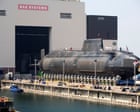
The Dreadnought-class submarine programme represents one of the most substantial defence procurement initiatives undertaken by the British government in recent decades. With an estimated value of £31 billion, these advanced nuclear submarines will be constructed in Barrow-in-Furness, the Cumbrian town that has served as Britain's primary submarine manufacturing facility for generations.
The development of these cutting-edge vessels will generate considerable employment opportunities throughout the supply chain, extending benefits to engineering firms, component manufacturers, and supporting industries across the United Kingdom. This cascading economic effect demonstrates how defence spending translates into sustained job creation and technological advancement within local economies.
Barrow-in-Furness: A Hub of Naval Excellence
Barrow-in-Furness has maintained its reputation as Britain's preeminent submarine construction centre, housing the skilled workforce and specialized facilities necessary for building the world's most advanced nuclear-powered vessels. The town's long-standing expertise in submarine design and manufacture, accumulated over more than a century, positions it uniquely to lead the Dreadnought-class programme.
The renewal of submarine capabilities at this location underscores the government's commitment to preserving and enhancing Britain's defence industrial base. By concentrating advanced manufacturing at established centres of excellence, policymakers ensure that institutional knowledge, technical capabilities, and workforce expertise are retained and developed rather than dispersed or lost to international competitors.
Broader Implications for UK Reindustrialisation
Prime Minister Burnham's emphasis on viewing the Trident renewal programme as integral to Britain's reindustrialization strategy reflects a comprehensive understanding of modern defence policy. Rather than treating military expenditure as separate from economic policy, the government frames defence spending as a strategic tool for community regeneration and industrial capacity building.
The Dreadnought-class submarines will provide the United Kingdom with enhanced deterrent capabilities while simultaneously serving as the largest infrastructure investment in certain regions. This dual benefit—strengthening national security while revitalizing local economies—exemplifies how defence procurement can be structured to achieve multiple policy objectives simultaneously.
Commitment to Long-Term Capability and Employment
The submarine replacement programme's phased approach ensures sustained industrial activity and continuous employment throughout the design, construction, and testing phases spanning multiple decades. This extended timeline provides stability for the workforce in Barrow-in-Furness and throughout the supply chain, enabling businesses to plan long-term investments and expansions.
Workers employed in submarine manufacturing benefit from highly specialized training and competitive compensation, reflecting the technical complexity and national importance of their roles. These positions represent some of the most skilled manufacturing jobs available in the United Kingdom, attracting talented engineers and technicians committed to advancing British technological capabilities.
Strategic Necessity and Economic Impact
The government's commitment to Trident submarine renewal addresses both immediate and long-term strategic considerations. Modern submarine technology remains fundamental to Britain's independent nuclear deterrent, ensuring that the nation maintains credible defence capabilities in an increasingly complex security environment.
Beyond security considerations, the programme demonstrates how substantial government investment in advanced manufacturing can serve as an anchor for regional economic development. The multiplier effects of submarine construction extend throughout supply networks, affecting everything from advanced materials suppliers to specialized engineering services.
The Launch and Future Direction
Thursday's formal launch of the next programme phase will serve as an important statement of government intent regarding defence priorities and regional economic development. Through this initiative, Prime Minister Burnham will communicate the administration's determination to strengthen Britain's defence posture while simultaneously advancing the broader reindustrialization agenda.
The Dreadnought-class programme stands as testimony to Britain's continuing capacity to design, develop, and manufacture world-leading military technology, positioning the nation as a serious participant in global defence innovation and demonstrating sustained commitment to maintaining the world's most advanced submarine fleet.